

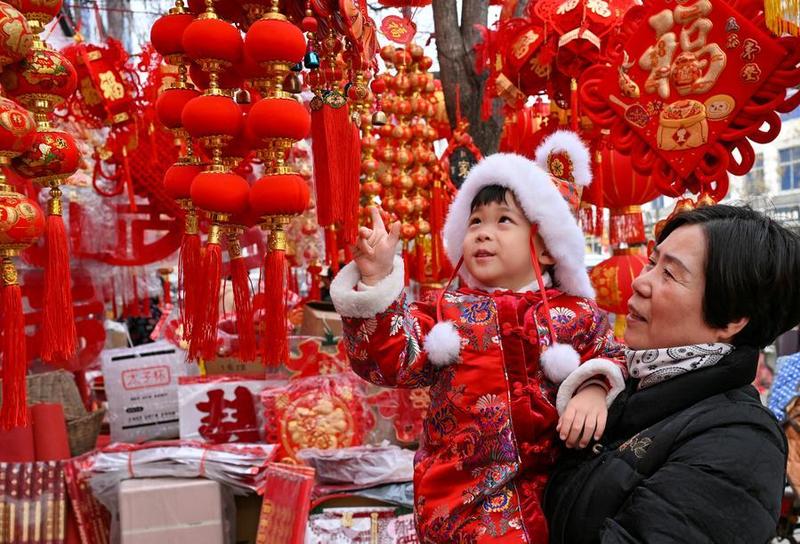
People buy decorations for the upcoming Spring Festival at a market in Xiayi county, Shangqiu city, Central China's Henan province, Feb 10, 2026. [Photo/Xinhua]
As the retail landscape for Spring Festival unfolds, traditional models of holiday shopping are being replaced by a focus on lifestyle, experience and emotional connections, compelling retailers and brands alike to rethink their strategies for the 2026 season, according to an industry report.
NielsenIQ's latest report,"2026 Year of the Horse Spring Festival Retail Trends Outlook", found that to thrive in this holiday season market, retailers are encouraged to focus on two core growth drivers — creating meaningful rituals and cost-effective gifting.
Retailers must also tap into the growing potential in lower-tier markets, fueled by a surge in return-home travel and tourism, while adopting an experiential mindset that emphasizes customer engagement over simple sales of goods and services, said the report.
During the 22 days leading up to the 2025 Spring Festival, cross-regional mobility surged to more than 5.5 billion trips, marking an 8 percent increase year-on-year. A July survey, also by NielsenIQ, found that 11 percent more consumers planned to increase their holiday spending in 2026.
The report identifies three emerging consumption trends that are reshaping the holiday market including retro traditions such as the rising popularity of intangible cultural heritage skills.
It also covers purchasing shifts from cost-effectiveness to emotional value as consumers are increasingly prioritizing emotional connections and self-expression in their buying habits.
Another trend is flexible reunion models. As such family get-togethers become more dynamic, younger generations are opting for "on-the-move" celebrations, with premade festive meals and cultural tourism activities gaining in popularity.
The report emphasizes how smaller city markets are playing an increasingly central role in the Spring Festival economy. Holiday-related mass consumption, once concentrated in major urban hubs, is now expanding to county-level areas. The return-home travel wave has transformed these regions into essential consumption centers, with hometown supermarkets and local stores becoming key locations for purchasing Chinese New Year-related goods. Instant retail, for example, saw a 42 percent year-on-year increase in orders. Time-honored brands have tapped into this trend by collaborating with local experiences, and supermarkets are incorporating intangible cultural heritage elements to attract consumers.
NielsenIQ's analysts also show how gifting and dining practices are becoming central to Spring Festival retail strategies. Gift boxes, particularly those focused on health and wellness, are expected to see continued growth. In the dining sector, convenience remains key. Data show that premade dishes exceeded 20 billion yuan ($2.89 billion) in sales during the 2025 Spring Festival, up more than 50 percent year-on-year.
 Editor:Gao Weiyi

